
In Vitro Fertilization
In Vitro Fertilization (IVF) Treatment
Turning Dreams into Reality.
In vitro fertilization is the most effective type of fertility treatment that involves the handling of eggs, embryos, and sperm. Together, this group of treatments is called assisted reproductive technology (ART).
IVF can be done using a couple’s own eggs and sperm. Alternatively, it may involve eggs, sperm, or embryos from a known or unknown donor. In some cases, a gestational carrier — someone who has an embryo implanted in their uterus — might be used.
The chances of having a healthy baby using IVF depend on many factors, such as age and the cause of infertility. If more than one embryo is placed in the uterus, it can result in a multiple pregnancy.
At Reprolab, we pride ourselves on having one of the best in vitro fertilization programs in the country. We are in the business of turning our patients’ dreams of having children into a reality.
In vitro fertilization (IVF) is a complex series of procedures that can lead to pregnancy. It’s a treatment for infertility, a condition in which one fails to conceive after a year of trying for most couples. IVF can also be used to prevent passing on genetic problems to a child.
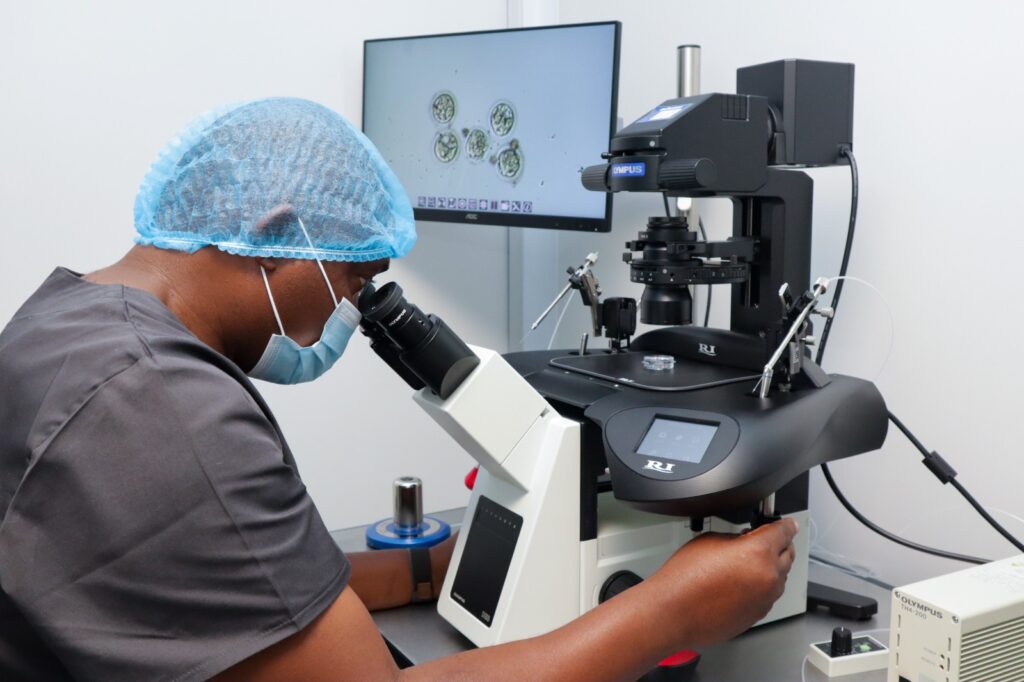
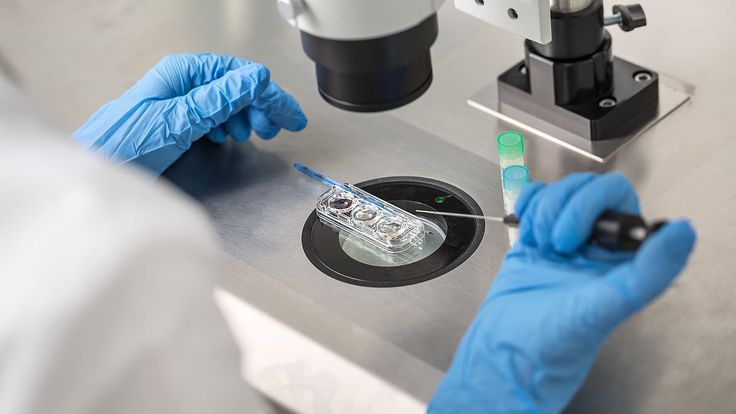
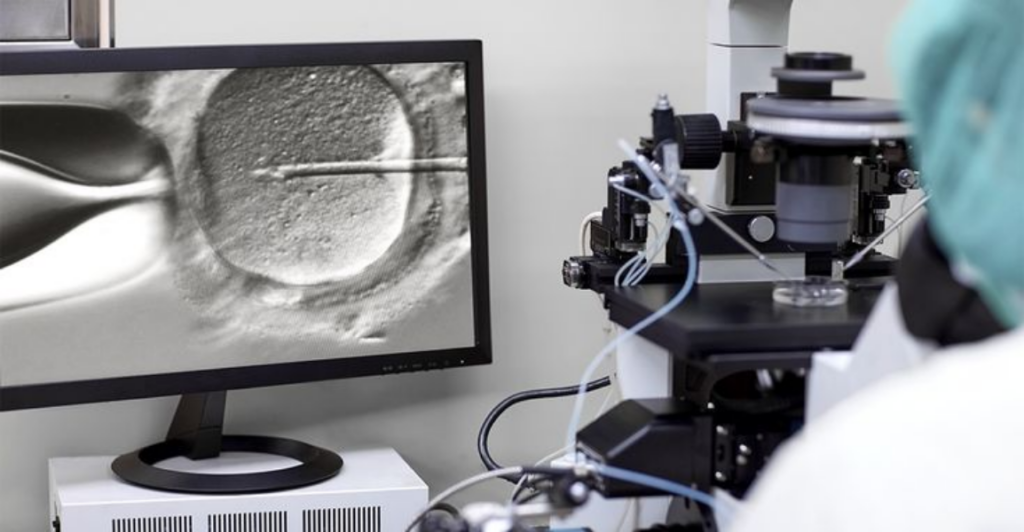
During in vitro fertilization, mature eggs are collected from the ovaries and fertilized in the laboratory. One or more of the fertilized eggs, called embryos, are transferred to the uterus to attempt a pregnancy. One full cycle of IVF takes about 2 to 3 weeks. Sometimes these steps are split into different parts, and the process can take longer.
In Vitro Fertilization (IVF) Treatment
Turning Dreams into Reality.
In vitro fertilization (IVF) is a complex series of procedures that can lead to pregnancy. It’s a treatment for infertility, a condition in which one fails to conceive after a year of trying for most couples. IVF can also be used to prevent passing on genetic problems to a child.
During in vitro fertilization, mature eggs are collected from the ovaries and fertilized in the laboratory. One or more of the fertilized eggs, called embryos, are transferred to the uterus to attempt a pregnancy. One full cycle of IVF takes about 2 to 3 weeks. Sometimes these steps are split into different parts, and the process can take longer.
In vitro fertilization is the most effective type of fertility treatment that involves the handling of eggs, embryos, and sperm. Together, this group of treatments is called assisted reproductive technology (ART).
IVF can be done using a couple’s own eggs and sperm. Alternatively, it may involve eggs, sperm, or embryos from a known or unknown donor. In some cases, a gestational carrier — someone who has an embryo implanted in their uterus — might be used.
The chances of having a healthy baby using IVF depend on many factors, such as age and the cause of infertility. If more than one embryo is placed in the uterus, it can result in a multiple pregnancy.
At Reprolab, we pride ourselves on having one of the best in vitro fertilization programs in the country. We are in the business of turning our patients’ dreams of having children into a reality.
Essential Services
for In Vitro Fertilization
Testicular Sperm Retrieval/Extraction
Egg and Embryo Freezing
Testicular Sperm Retrieval/Extraction
When men produce little to no sperm in their semen or are unable to ejaculate, sperm retrieval might just be the answer.
There are several ways to retrieve sperm from the reproductive tract. Men with azoospermia (no sperm in the semen) can father a child through intra-cytoplasmic sperm injection if sperm can be retrieved from their epididymis or testis. Various percutaneous and open surgical procedures have been described to retrieve sperm. In men with obstructive azoospermia, epididymal sperm can usually be retrieved by percutaneous epididymal sperm aspiration (PESA) or needle aspiration biopsy. In men with non-obstructive azoospermia, there will be no sperm in the epididymis, and testicular sperm retrieval is required.
Egg and Embryo Freezing
Cryopreservation or cryobanking is the process of collecting, cooling, and storing gametes (sperm and eggs) and embryos (tissues) at very low or freezing temperatures to save them for future use. Frozen reproductive materials can be stored for many years and used during artificial insemination procedures (sperm) or in vitro fertilization (sperm, egg, embryos) to achieve pregnancy. Following strict ethical guidelines, such products can also be donated or discarded.
Egg Freezing
By puberty, women have an average of 300,000 to 400,000 eggs remaining in their ovaries, and that number continues to decrease with age. This is one reason it can be more difficult to become pregnant after the age of 35. Many women want to become parents but worry about the effect of their age on their chances of conceiving. Egg freezing (oocyte cryopreservation) is one method becoming more commonly used to increase women’s chances of having a baby as they age. For women who want children in the future, their early 30s are an ideal time to begin considering timelines based on their careers, relationship status, and how many children they want.
Egg freezing is something to consider if:
- You have recently been diagnosed with cancer.
- You have recently been diagnosed with premature ovarian failure.
- You have not found the right partner to begin a family.
- Starting your family is something you would prefer to pursue later in life.
Egg freezing technology has significantly advanced, and offers women the gift of choice, flexibility, and control over their reproductive future. Frozen oocytes can be stored for several years until needed.
Embryo Freezing
Embryo freezing can be an option for fertility preservation. Embryos may be frozen during an IVF cycle in case of hyperstimulation of the woman. Following an IVF cycle and fresh transfer, excess embryos are frozen and stored for future use.
Exploring Fertility Options: Egg vs. Embryo Freezing
The younger a woman is when she freezes her eggs, the greater her odds of success. Your eggs are never going to be of better quality than they are today. Research also shows that most women do not end up using frozen eggs for reasons that include getting pregnant naturally.
Patients commonly ask if they should freeze eggs or embryos, and when they should do so.
Freezing eggs is more common and doesn’t require a woman to have a partner or sperm donor yet. However, frozen embryos can improve the odds of a live birth in the future because they’ve made it further along in the reproductive process.
There’s a huge attrition rate from an egg to an embryo. Freezing embryos provide more information than freezing eggs. It’s already vetted. It’s already done a lot of the things it needs to do to result in a pregnancy than the eggs.
A woman does not need a partner’s consent to freeze or warm her eggs, but embryos require the couple’s consent. This might pose a challenge in cases of divorce or simple disagreement.
Appointment Form
Navigate between the English and French tabs to fill in the correct form with the appropriate language.
English
Français
English
Start your journey with us
Reprolab’s process takes you from appointment to solution, with expert guidance every step of the way, bringing your dreams to life.

Français
Commencer votre voyage avec nous
Le processus de Reprolab vous emmène du rendez-vous à la solution, avec des conseils d’experts à chaque étape, pour donner vie à vos rêves.
Appointment
Start your journey with us
Reprolab’s process takes you from appointment to solution, with expert guidance every step of the way, bringing your dreams to life.
Visit Us
Lifestyle Management Park
Netcare-Unitas Hospital, 860 Clifton Avenue, Die Hoewes, Centurion.
Fertilite Fertility Centre
Life Wilgeheuwel hospital Roodepoort, 1724
STHEMBA FERTILITY CENTRE
Rustenburg-Northwest
ZIMBABWE
Dawn Fertility Centre 11 Durkink, Alexandra Park-Harare
Appointment
Start your journey with us
Reprolab’s seamless process takes you from appointment to solution, with expert guidance every step of the way, bringing your dreams to life.
Visit Us
Lifestyle Management Park
Netcare-Unitas Hospital, 860 Clifton Avenue, Die Hoewes, Centurion.
FAQs
Popular Questions
Find answers to your most pressing questions about In Vitro Fertilization (IVF) – empowering you with knowledge and clarity on your path to parenthood.
In-vitro fertilization (IVF) is a set of advanced fertility treatments and techniques that culminate in joining a woman’s egg and a man’s sperm outside the body in a laboratory dish. Once fertilized, the egg is cultured and transferred into a prepared uterus to attempt a pregnancy. Excess embryos are frozen and stored for future use.
IVF is generally considered very safe and those who went through experienced no problems with their health or pregnancy. However, as with any other medical procedure, there are some risks to be aware of, which include: ovarian hyperstimulation syndrome (a severe reaction to fertility drugs). Strict follow ups including blood tests and scans are essentials to avoid such. We encourage you to speak to your Dr regarding any concerns.
Majority of our patients concieve within the first to third attempt.
Starting the IVF process at ReproLab involves several important steps: Initial consultation, fertility assessment, discussing and explaining treatment plans, hormonal injections, scans, blood tests, egg
retrieval, insemination of eggs, embryo culture, embryo transfer and possible freezing of embryos, then pregnancy test 10 days post embryo transfer.
Your fertility specialist and the team at ReproLab
will guide you through each step and provide all necessary information and support.
Please reach out to the team directly at info@reprolab.co.za to schedule your initial consultation.